
RED LIGHT
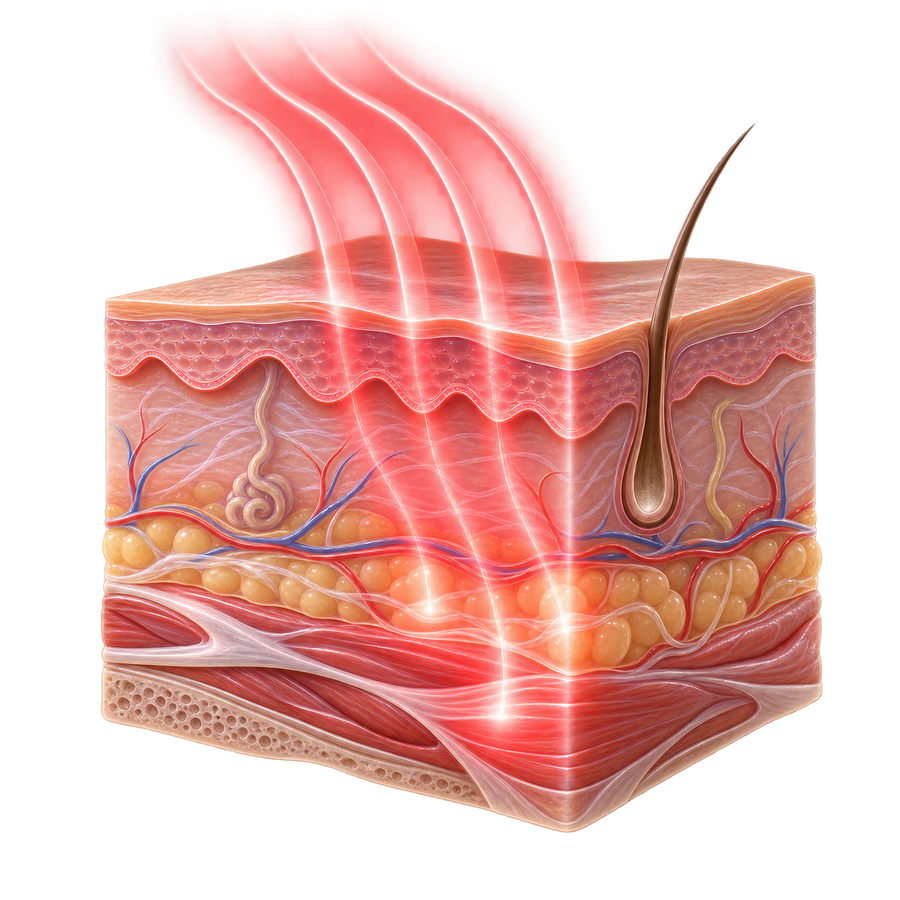
Visible red light acts primarily on the more superficial layers of the skin and tissues.

WHAT IS RED LIGHT THERAPY?
Red light therapy uses specific wavelengths of red and near-infrared light. The light reaches the surface of the skin and parts of the tissues, where it is absorbed by the cells.
At Nexeltron, we use large LED panels that allow for comfortable exposure of selected body areas while in a sitting or semi-reclining position.
Visible red light acts primarily on the more superficial layers of the skin and tissues.
Near-infrared light has a greater ability to penetrate deep into tissues than red light.
The session takes place at a specific distance from the panel and for a scheduled duration, in accordance with the device parameters and usage protocol.
HOW DOES LIGHT THERAPY WORK?
Red light therapy uses specific wavelengths of red and near-infrared light. At Nexeltron, we use this type of exposure as a supportive element for regeneration, wellbeing, and a modern approach to recovery.
Red light works more superficially, while near-infrared can reach deeper. The sessions are comfortable, non-invasive, and performed under controlled conditions.

Red light acts mainly on the more superficial layers of skin and tissue.

Near-infrared light can penetrate deeper than red light, reaching underlying tissues.

Light is absorbed by cells, where it can support processes related to cellular energy production.

In practice, red light therapy is used as a supportive element for recovery, comfort, and regular regeneration.
WHAT IS THE SESSION LIKE?
A red light therapy session is non-invasive and takes place in a comfortable position. The mobile panel is positioned so that the light covers a specific area of the body or a larger surface.

The user assumes a comfortable sitting or semi-reclining position, and the selected area of the body is prepared for light exposure.

The mobile panel is positioned at the appropriate angle and distance to evenly illuminate the selected area of the body.

During the session, the body is exposed to red and near-infrared light for a duration determined by the selected session variant.

After the exposure is complete, the user can return to normal activities or combine light therapy with the next Nexeltron recovery element.
TYPES OF LIGHT
Light encompasses many wavelength ranges. Individual colors differ in terms of, among other things, penetration depth and how they interact with the skin and tissues.
In phototherapy, different light ranges are used depending on the intended application. The following summary is for educational purposes and highlights the basic differences between them.
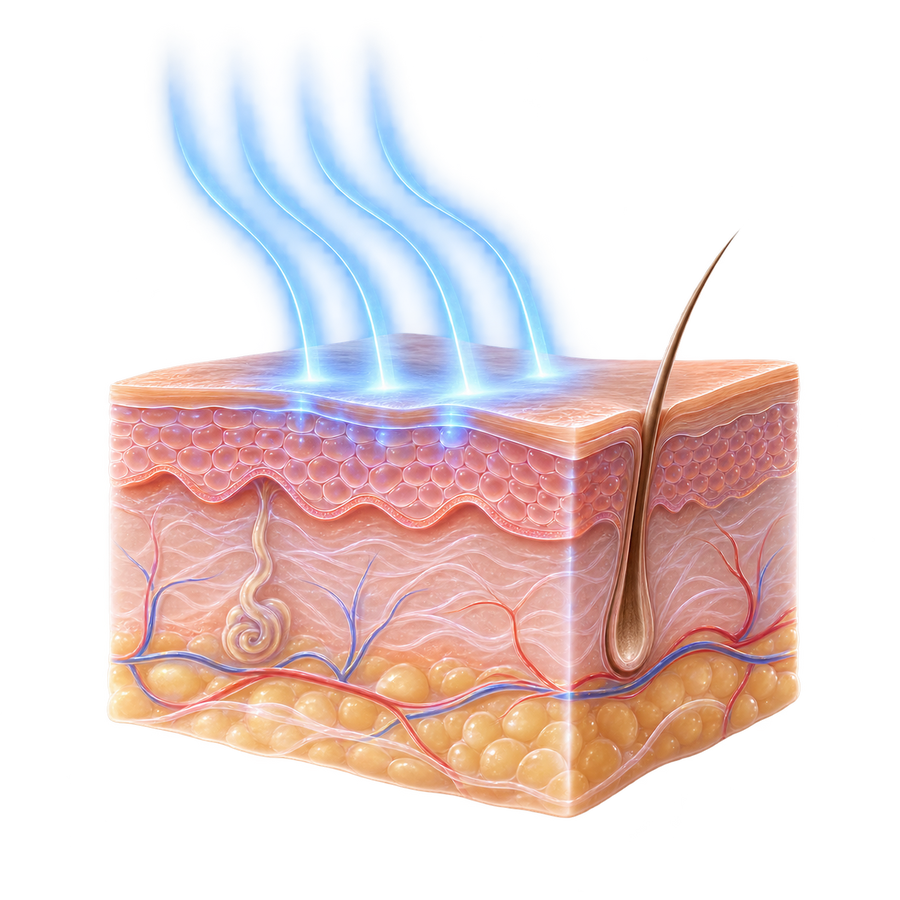
440–500 nm
Blue light acts mainly superficially. In phototherapy literature, it is described primarily in the context of dermatological applications and its effect on the skin's surface.
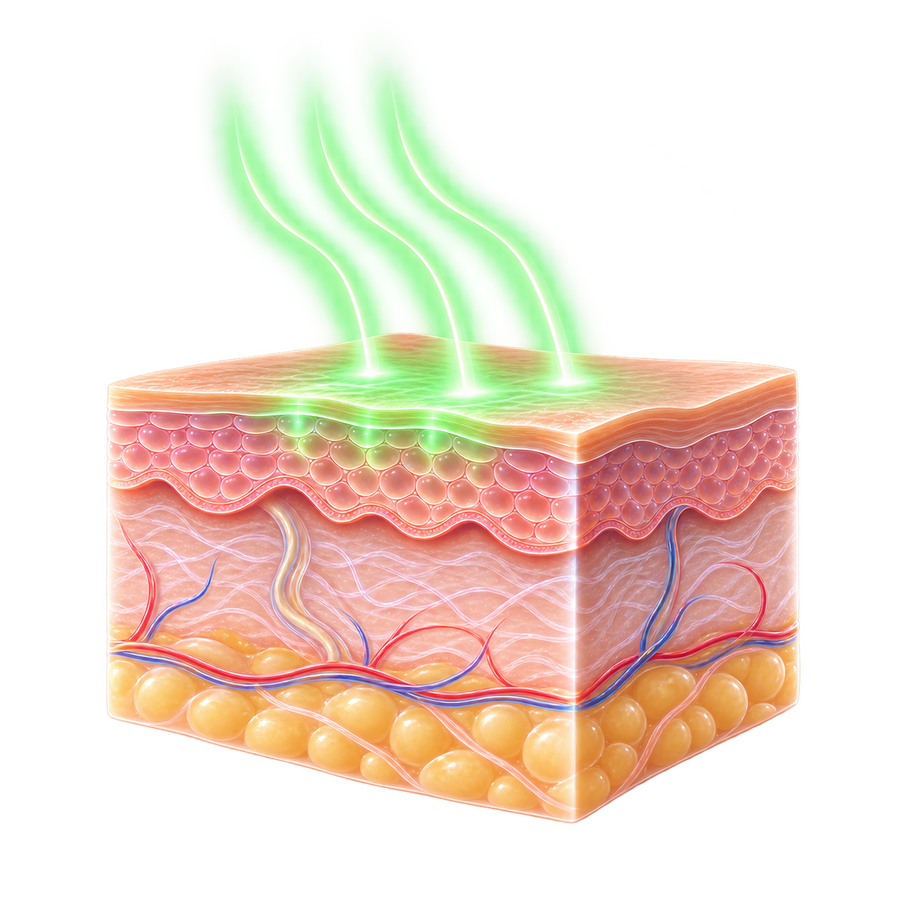
500–570 nm
Green light reaches the superficial layers of the skin and is used in selected applications related to its appearance and pigmentation.
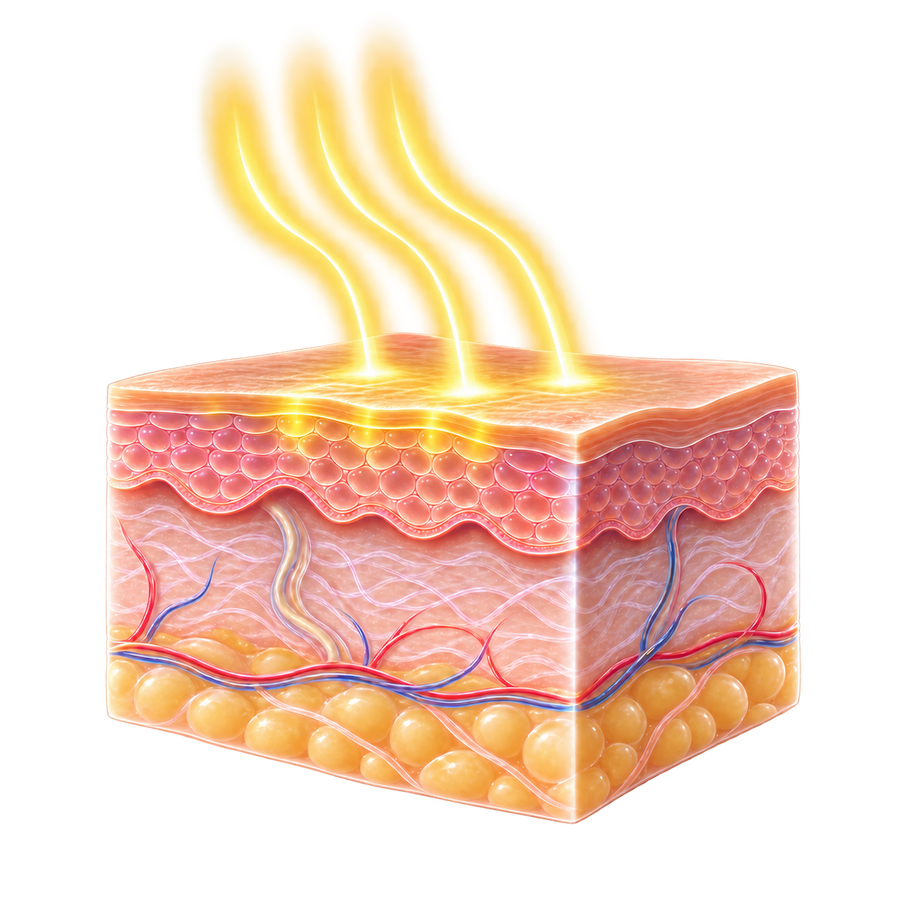
570–590 nm
Yellow light acts primarily on the surface and is used in certain phototherapeutic solutions related to skin care.
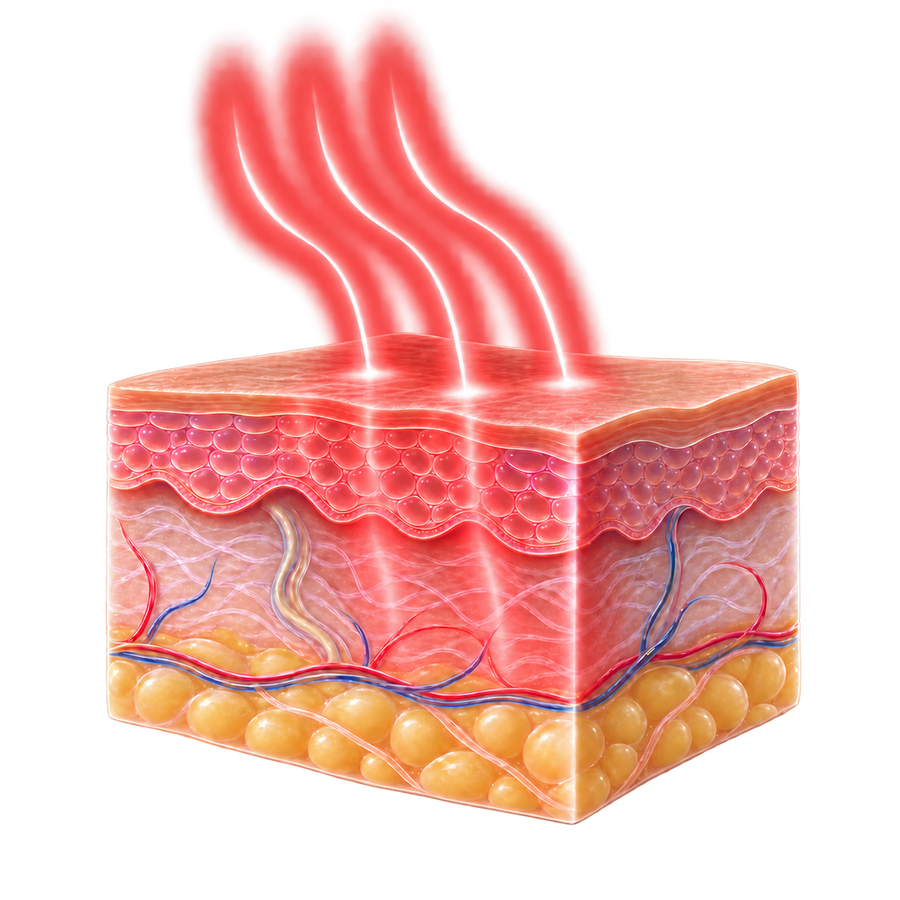
620–750 nm
Red light penetrates deeper than blue, green, and yellow light. It is widely used in photobiomodulation and applications related to skin and regeneration.
NIR
Near-infrared light is invisible to the human eye and can penetrate deeper into tissues than red light. The device materials presented for Nexeltron include, among others, a wavelength of 850 nm.
SESSION PARAMETERS
Two sessions using the same wavelength may differ in actual exposure. Light intensity, distance from the panel, and session duration are also significant.
Therefore, light therapy should not be reduced to the principle of "the stronger and longer, the better." Parameters must be selected as a whole.

The wavelength determines the type of light and influences, among other things, its ability to penetrate skin and tissues.

Irradiance defines the amount of light power reaching a specific surface. It is one of the key exposure parameters.

The user's distance from the light source affects the amount of energy reaching the body's surface and is therefore an element of the session protocol.

The exposure time, together with the light intensity, influences the final energy dose delivered during the session.
MORE IS NOT ALWAYS BETTER
In photobiomodulation, a dose-dependent response is described. Too little exposure may be insufficient, while increasing intensity or time beyond the appropriate range does not necessarily improve the effect. Therefore, wavelength, intensity, and time should be considered together.
WHERE IS LIGHT THERAPY USED?
Red light and near-infrared light are used in many areas related to recovery, sports, comfort, and skin condition. The effect depends on the wavelength, dose, exposure time, and the protocol used.

Light therapy is used in sports as an element of recovery after training and intense physical exertion.

Red and near-infrared light are used for muscle recovery and reducing perceived post-exercise soreness.

Photobiomodulation is used and studied in the context of local blood flow and processes related to microcirculation.

Red light and near-infrared light are used in selected applications related to musculoskeletal pain, tension, and discomfort.

Photobiomodulation is used in areas related to tissue regeneration and repair processes.

Red light is popular for applications related to skin condition, appearance, elasticity, and collagen-related processes.
The scope of applications for light therapy is broad, but the level of evidence varies depending on the purpose, wavelength, and protocol used. Light therapy is not a substitute for medical diagnosis or treatment.
SAFETY AND CONTRAINDICATIONS
Red light therapy is non-invasive; however, before a session, one should consider individual light sensitivity, medications being taken, and the safety guidelines specified for the particular device.

PHOTOSENSITIVITY
People with photosensitivity disorders or those taking photosensitizing medication should ensure that light therapy is appropriate for them before the session.

EYE PROTECTION
The panel's intense light can be very bright. Eye protection and usage guidelines should comply with the specific device's manual.

BEFORE THE SESSION
Particular attention may be required for conditions such as active skin lesions, diseases that increase photosensitivity, ocular problems, and other health conditions that may affect the safety of exposure.
BEFORE THE FIRST SESSION
Before beginning therapy, the user should read the Nexeltron safety guidelines and the device manufacturer's requirements. In the case of illness, the use of photosensitizing medications, or any health concerns, the possibility of using the therapy should be discussed with an appropriate specialist beforehand.

RED LIGHT AT NEXELTRON
At Nexeltron, we use a professional, full-size red and near-infrared light therapy LED panel. Its large surface area allows for light coverage over a significant portion of the body without the need for small, localized devices.
The panel allows for the adjustment of wavelengths, intensity, and exposure time, enabling session parameters to be tailored to the chosen protocol and area of application.
The panel configuration includes 480, 630, 660, 810, 830, 850, and 1060 nm, allowing for operation across various visible and near-infrared light ranges.
The panel is approximately 180 × 60 cm and is designed to allow for the exposure of large areas of the body during a single session.
Light intensity and individual channels can be adjusted, and the session time can be set between 1 and 30 minutes.
The panel can be operated via touchscreen, remote control, or app, depending on the device configuration.
FAQ — RED LIGHT THERAPY
Key information regarding the session procedure, type of light, preparation, and safe use of the panel.
RED LIGHT THERAPY AT NEXELTRON